Guides · 4 min ·
Sensory room or sensory pod? How to choose for a school, clinic or airport
The short answer
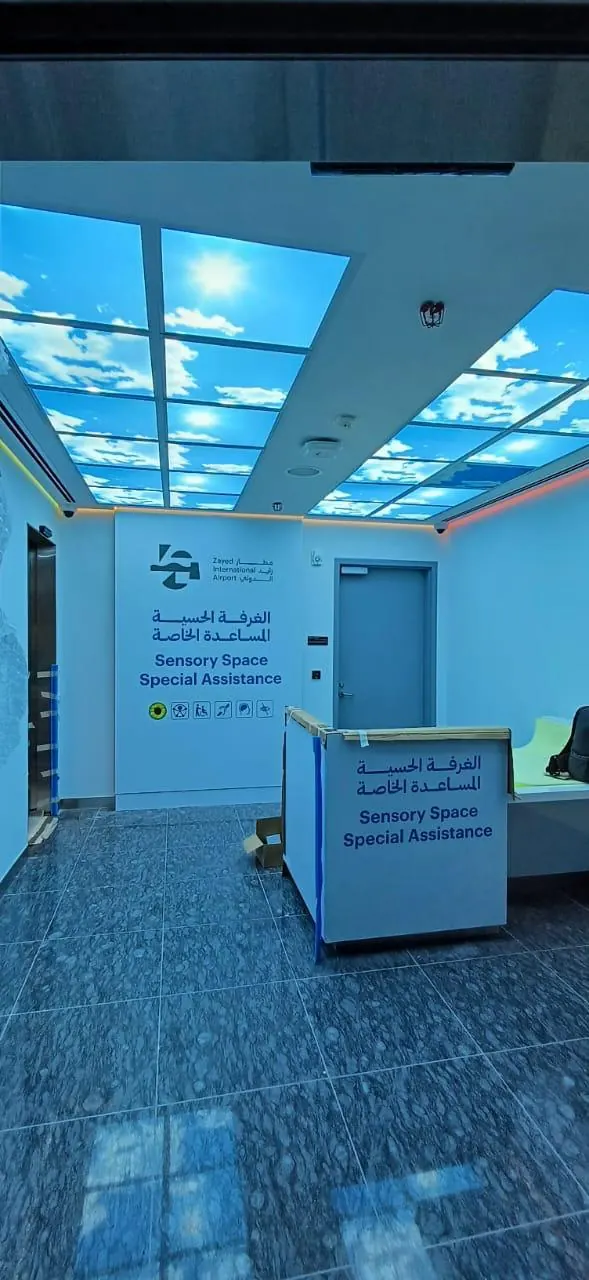
Choose a sensory room when you have a dedicated room and want several users, therapy sessions and movement equipment; choose a sensory pod when space is limited, the area is open-plan or public (such as an airport, mall or school corridor) and you need a private, calm retreat for one user at a time that installs quickly.
Side-by-side comparison
The table summarises the practical differences we discuss with UAE clients.
| Sensory room | Sensory pod | |
|---|---|---|
| Space | Dedicated room, typically 12–40 m² | About 2.4 × 1.2 m |
| Installation | On-site fit-out | Self-contained, quick install |
| Users | Individual or group sessions with a therapist | One user at a time |
| Movement | Swings and soft play possible | Relaxation and regulation |
| Portability | Fixed | Can be relocated |
When the pod wins
The Sensory Pod — which ENZYM MEDICAL distributes exclusively in the UAE — measures about 8 ft by 4 ft and includes a colour-changing ceiling, a vibration mattress, Bluetooth audio and an app-controlled screen. It needs no construction, so it suits airports, universities, malls and schools that cannot give up a whole room.
When the room wins
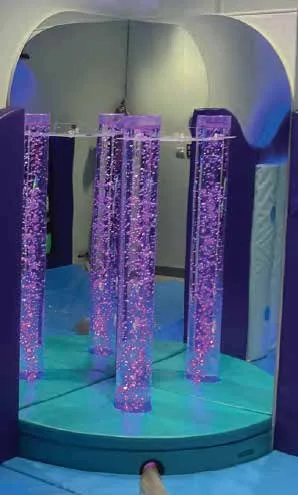
A full room allows group sessions, a therapist working alongside the user, swings and soft play, and a layout tailored to your programme. Many centres combine both: a sensory room for therapy and a pod in a corridor or reception for regulation on demand.
FAQ
Can a sensory pod be moved?
Yes. A pod is a free-standing unit, so it can be relocated within a building, which is not possible with a fitted room.